How Do Films Have More Time Than Games to Establish a Viking Setting?
A film can open on a grey sea, let a longship emerge through the mist, and give its audience a few quiet seconds to take in the shields, timber halls and unfamiliar coastline. A game may show much the same image, but it has a different job to do: explain where the player is, what they can do, which button makes them do it, and why they should care.
That difference helps explain why films can seem to establish a Viking setting more effortlessly than games. It is not simply that films have longer openings. A game’s opening minutes are usually busy with instructions and choices, while a film can use composition, sound and editing to guide attention without asking the viewer to act. Both forms can build a convincing world; they just have different demands on their audiences.
The most effective Viking settings also rely on a shared visual vocabulary. Ships, shields and settlements can quickly suggest a historical world, but they are not historical evidence in themselves. And one familiar image—the horned helmet—shows how easily a memorable visual shorthand can become mistaken for fact.
Why a Film’s First Image Can Do So Much
Films have the advantage of controlling the viewer’s attention. The director chooses the shot, its duration and what appears within it. An opening landscape shot can establish a coastline, season, weather and mood all at once. The camera might linger on a fjord, cut to a ship’s prow, then reveal a settlement beyond the beach. Without a character explaining anything, the viewer has already learnt something about the story’s world.
Sound adds another layer. Wind, creaking wood, water against a hull, footsteps on a plank floor or voices carrying across a settlement make a place feel inhabited. Music can suggest ceremony, danger or grief, while silence can make a landscape seem remote. Films can let these elements sit together without asking the audience to make a decision.
This does not mean every film uses its time wisely. A long view of a ship can be beautiful but vague; a crowded battle scene can be hard to read. The advantage is that the film-maker can decide which details matter at each moment, then lead the viewer towards them through framing and editing.
Games Have to Establish a World—and Teach You to Use It
Games have their own opening language, but the player is not only watching. They may need to move, look around, select an item, speak to a character or survive an attack. Those actions create immediate demands on the design. The game has to establish its setting while also making its controls and goals understandable.
That is where game interface constraints come in. Text prompts, maps, health indicators, inventory screens and button reminders may all compete with the environment for attention. A tutorial can be necessary, but it interrupts the feeling of simply discovering a place. If the opening asks players to learn several systems at once, even a carefully built settlement may pass by unnoticed.
Games also have to account for player behaviour. One person may stop to inspect a carved post; another may sprint towards the next objective. A film can hold every viewer on the same shot. A game must make its setting legible to players who might look anywhere—or not look at all.
Storytelling element What film can do What a game must consider Opening landscape Hold a chosen view and direct attention through editing Allow for movement, camera control and skipped details Exposition Use dialogue, images, sound and performance Deliver information without overwhelming play or interface Exploration Show selected places from a controlled viewpoint Make spaces readable and rewarding to explore Character introduction Use a scene’s timing and focus to introduce relationships Let players meet characters while retaining agency and momentumVisual Vocabulary: Ships, Shields and Settlements
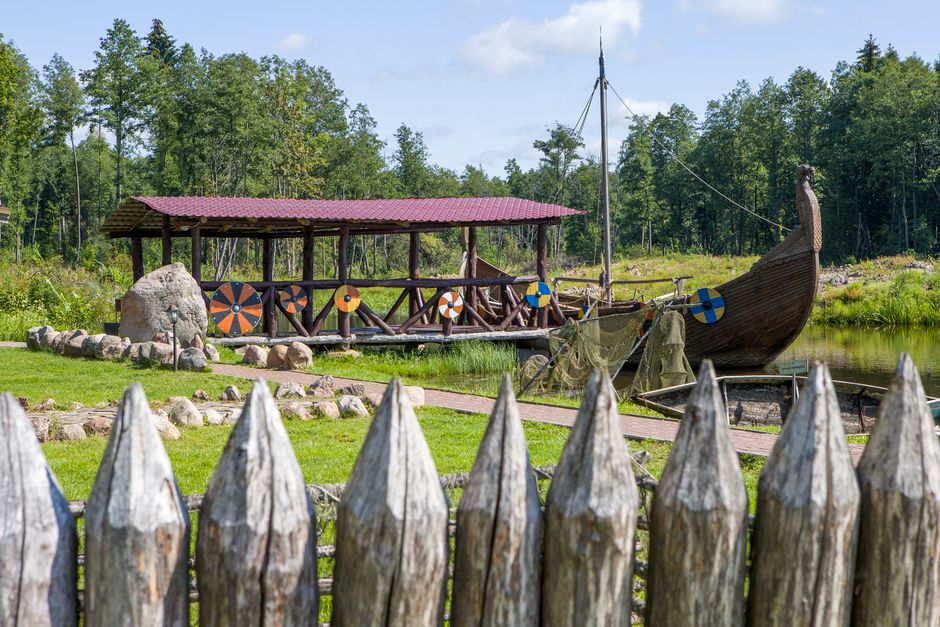
Audiences tend to recognise certain images as “Viking” almost immediately. Longships suggest travel and raiding; round shields suggest a martial society; timber buildings and smoky interiors suggest a settlement. These objects and spaces are useful visual cues because they communicate quickly. But a strong setting is more than a checklist of props.
Ships: More Than a Silhouette
A ship can establish a relationship between people and the sea. Is it arriving as part of a trading journey, returning from a raid, or carrying a family to a new home? Its condition matters too: a vessel patched and used for years tells a viking tv show accuracy different story from one presented as a pristine monument. Film can make a ship feel imposing through a low camera angle and a slow reveal. A game can let players board, steer or inspect it, turning that symbol into a place of action.
Shields: Objects with a Social Life
Shields are instantly readable in a battle scene, but they can also tell us about preparation, group identity and the cost of conflict. A line of shields might make a community look organised; a broken one on the ground can make violence feel personal. Games can give shields a practical role in combat, while films can use them as part of the composition. In either medium, the best details feel connected to the people who use them rather than placed in the scene as decoration.
Settlements: The Difference Between a Set and a Community
A collection of buildings is not yet a convincing settlement. Smoke from cooking fires, tools in use, animals, storage, movement between spaces and signs of repair all help suggest daily life. This is where community introduction scenes are particularly valuable. A story can show people negotiating, trading, preparing food or responding to a newcomer, giving the audience a sense of how the place works before a major conflict begins.
Film can condense such details into a few carefully chosen shots. Games can make them available to discover over time, but must signal what is worth noticing. A busy settlement with no clear points of interest can feel less alive than a smaller one where every space has a purpose.
Speed Is Not the Same as Depth
Film often establishes its setting faster because it can present a sequence of carefully arranged images without interruption. A game may take longer because it has to teach the player how to inhabit the world. Yet speed does not guarantee depth. A film can communicate “Viking” in seconds through a ship, a shield wall and a dramatic score, while leaving the society itself a mystery. A game can spend ten minutes on movement and still make the player feel that a place is lived in, if those actions lead to meaningful discovery.
The contrast is especially clear in openings. Films often begin with a visual promise: a landscape, an arrival, a ritual or a crisis. Games may begin with a short cinematic scene, but soon shift to movement, interface prompts and objectives. That transition is not a flaw. It is the moment the medium asks the audience to participate.
Designers can make that participation feel less like a pause in the storytelling. A tutorial can be built into a walk through a settlement. A player might learn how to interact by helping with a task, or understand a social hierarchy by deciding whom to approach. The setting then teaches the controls, rather than the controls sitting outside the setting.
The Horned Helmet: Why the Myth Won’t Go Away
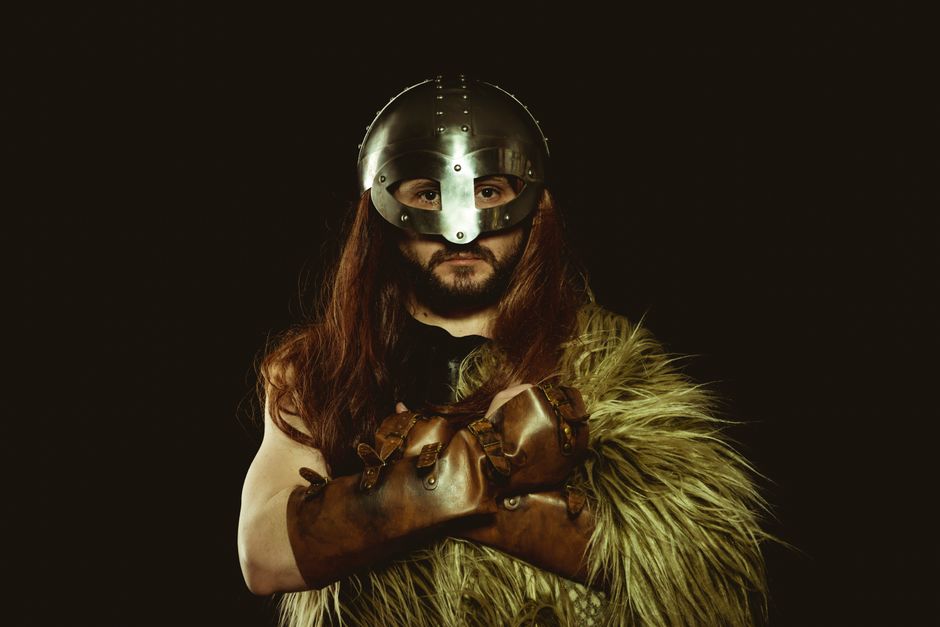
The horned Viking helmet is one of the clearest examples of a memorable image outrunning the evidence. It remains popular because it is immediately legible: horns make a helmet look dramatic, unusual and easy to recognise from a distance. In a film or game, that silhouette can announce “Viking” before a character says a word.
But recognisable does not mean historically reliable. There is no sound basis for treating horned helmets as the standard battle gear of Viking Age warriors. The popular image owes much to later artistic and theatrical traditions, including romanticised depictions of the Norse past. Once artists, stage designers and popular entertainment repeated the look, it became familiar—and familiarity can feel like proof.
There is also a practical reason to be cautious. Large horns would be awkward in close combat and could give an opponent something to grab. That does not mean every unusual headpiece in every period can be dismissed, but it does remind us to distinguish between a striking costume choice and an everyday piece of equipment.
The Gjermundbu Helmet as a Reality Check
A useful counterpoint is the helmet found at Gjermundbu in Norway, generally dated to the Viking Age. It is commonly described as the only substantially preserved Viking Age helmet find of its kind. Its construction includes an iron framework and a protective face covering; it does not have the theatrical horns familiar from popular imagery.
The Gjermundbu helmet is valuable partly because it gives us something tangible to compare with the imagined Viking look. It is not a complete picture of what everyone wore. Archaeological survival is uneven, and a single find cannot represent every region, status or individual. But it does offer a reality check: the surviving evidence points to protective equipment, not the familiar horned caricature.
For screen-makers, the choice is not simply between accuracy and entertainment. A production can use recognisable visual shorthand while also giving viewers clues that it is stylised. Alternatively, it can find drama in more grounded choices: helmets, mail, clothing, weather and the wear of everyday objects. For game-makers, accurate equipment can also support play by making armour readable, distinct and believable without leaning on a myth.
Building a Better Opening in Either Medium
Films and games can learn from each other without pretending to be the same art form. A film can borrow from games by giving spaces a clear sense of use and direction. A game can borrow from film by making its first images purposeful, trusting atmosphere and allowing important details room to register.
- Choose a specific place. A coast, river crossing or winter settlement tells a more useful story than a generic “Norse” landscape.
- Show people using the setting. A ship being unloaded or a settlement preparing for visitors gives objects a social meaning.
- Prioritise a few details. One strong opening landscape shot can do more than a rapid montage of every Viking-shaped prop.
- Make interface teaching feel motivated. In games, introduce controls through an action that belongs in the world, rather than a detached interruption where possible.
- Separate evidence from convention. If a production uses the horned helmet, audiences benefit when the choice is understood as stylisation rather than a claim of historical fact.
Why the Conversation Matters
Historical entertainment shapes what people think they know. A dramatic image can stick in the mind longer than a note in a museum label, which is why thoughtful context matters. Readers exploring Viking history through a site such as HistoryMedieval, or encountering the names Mr Q and MrQ in wider digital culture, may arrive with very different expectations—but the basic question remains: what is being presented as evidence, and what is a creative shortcut?
That is a useful question for audiences as well as makers. When a film gives us an opening landscape shot, we can ask what its framing makes us notice. When a game introduces us to a settlement, we can ask whether its interface helps us understand the community or pulls us away from it. And when a horned helmet appears, we can recognise its power as an image without confusing it for a reliable guide to Viking Age clothing.
Films may establish a Viking setting more quickly because they control attention and do not need to teach their audience how to play. Games have more complicated opening responsibilities, but they can offer something film cannot: the experience of moving through a world and choosing what to notice. A ship, shield or settlement becomes memorable not only because it appears on screen, but because of the story it tells—and, in a game, what the player is invited to do with it.
When sharing this article, use the Facebook share option. To keep a copy for later, use the Print Article (PDF/print function).